
Victorian Homes in London: An architectural style and design guide
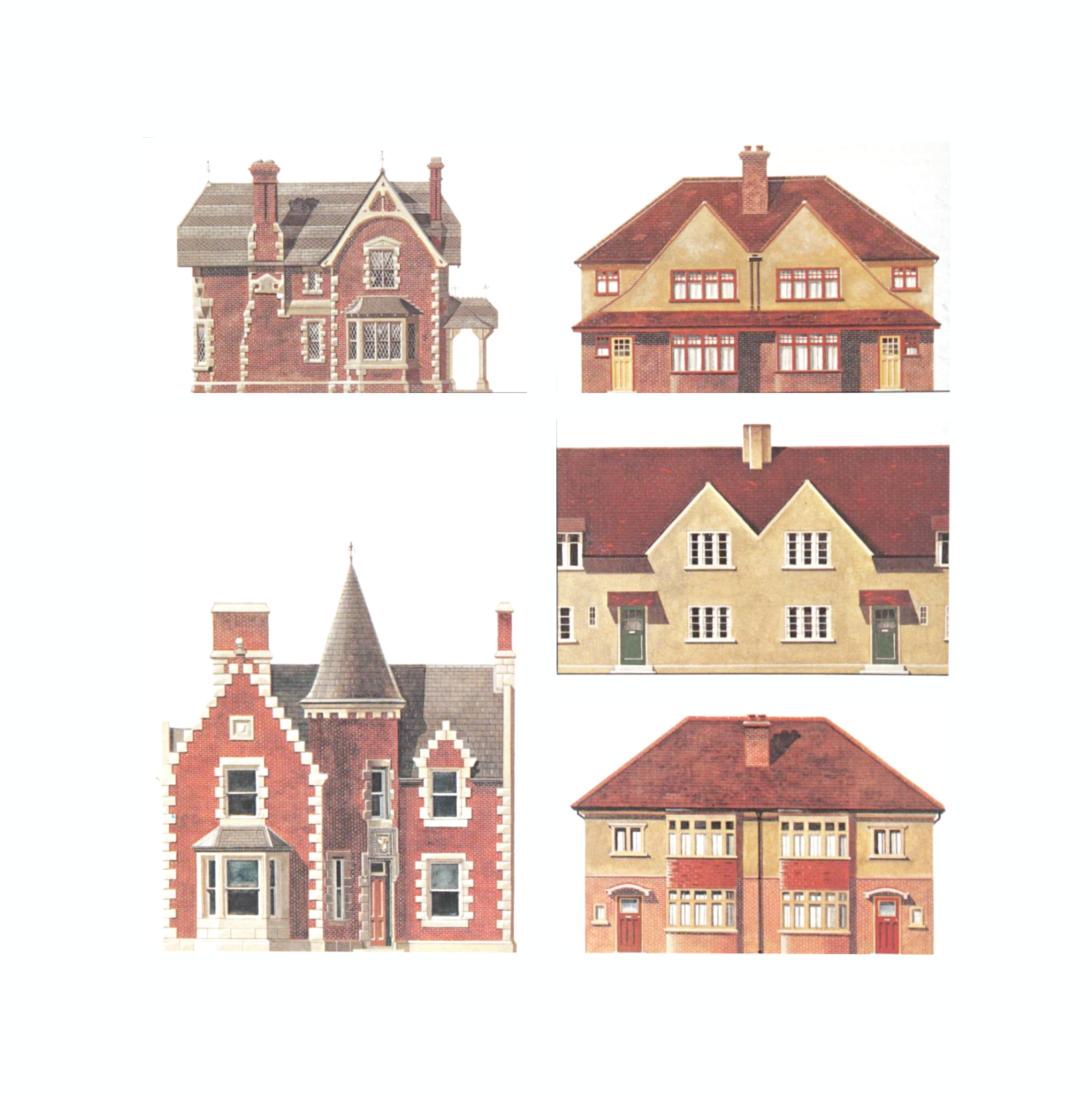
Taken from Houses of Britain: The Outside View by John Prizeman.
Introduction
This post is part of a series Office Chew Stewart are putting together on different periods of housing in the UK including Georgian, Edwardian and interwar housing. This week we are looking at Victorian architecture.
One third of the houses in Britain date from before 1914 and the vast majority are Victorian. The building boom experienced in cities in the 1850s, 60s and 70s has been exceeded only by developments of the 1920s and 30s. Any architectural history of Britain will demonstrate the broad regional variations in building material that resulted and how dramatically that changed with the Industrial Revolution.
Before 1842, drawings could not be copied except laboriously by hand. Builders worked instead from pattern books (such as those of Palladio or Batty Langley) interpreting designs by eye on site. Craftsmen thus worked akin to sculptors following a general pattern. It was this process that created the subtle variations on a theme that give old villages and towns their local character.
The industrial revolution changed everything. The growing ubiquity of the blueprint meant drawings could now be sent to multiple builders for competitive tendering and designers were freed from the need to reference local buildings. The canals and railways reinforced this shift, enabling heavy materials to be distributed nationally: cast iron from Scotland, terracotta from the Midlands, slates from Wales and Cumbria. Houses were no longer necessarily built from local materials and identical ornament began to appear on exteriors from Scotland to the southwest.
The building trade kept pace through widely read periodicals such as ‘The Builder’ and ‘The Building News’, and practical manuals like ‘The Builder's Practical Director’ and ‘The Encyclopaedia of Practical Carpentry’. Perhaps the most influential guide for the aspiring homeowner was Robert Kerr's ‘The Gentleman's House’ (1860s–70s) which presented designs across a variety of styles all based on the same plan and all distinctly Victorian.
What Style Is My London Home?
Victorian architecture was, above all, eclectic and identifying a style can be harder than it looks. That said, a few key movements shaped the majority of what was built.
Gothic Revival drew on medieval precedent and was boosted by the writings of Scott, and of A.W.N. Pugin. Key features include pointed arches, polychromatic brickwork and decorative stonework. The style spread across suburban streets and left its mark on whole neighbourhoods (such as north Oxford).
Italianate was particularly popular in the early Victorian period, characterised by stuccoed facades, tall windows with round arches and classical proportions. Many London terraces and villas from the 1830s and 1840s reflect this influence. Examples can be found in Queen's Gate, Holland Park and Kensington.
Queen Anne Revival emerged later in the century bringing a more playful domestic character, including red brick, white-painted sash windows, decorative gables and terracotta detailing. Architects such as Richard Norman Shaw were central to this movement and important examples can be found around Sloane and Cadogan Squares in London.
Eclectic Victorian is perhaps the most honest category of all. Speculative builders frequently borrowed from Gothic, Tudor, Classical and Italianate styles within a single design, meaning a house might combine half-timbered gables, classical sash windows and a cast-iron porch without any contradiction in intent.
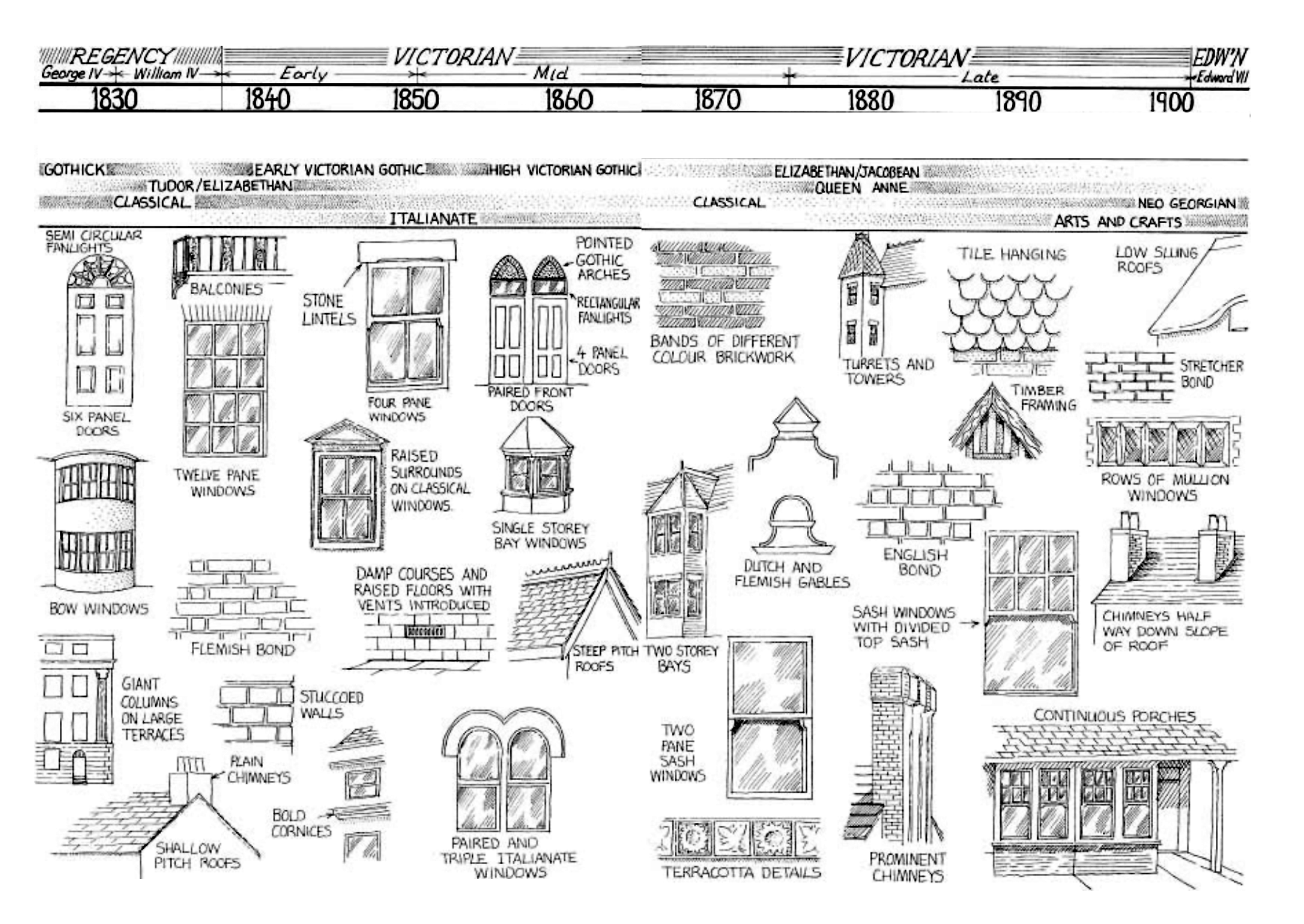
If you're unsure (which could be likely) the illustrations below may be helpful
Designing and extending with a London Victorian Home
Any extension should begin with a careful reading of the original building. Even where styles are mixed, there is usually a clear sense of proportion, material and rhythm holding the design together and a successful addition needs to respond to those qualities rather than ignore them. Because Victorian architecture was inherently eclectic, a well considered contemporary extension can sit comfortably alongside the original. The key is to engage with scale and structure, rather than copying surface details without purpose.
Office Chew Stewart highlights the following when planning an extension to a Victorian home:
Work with the Original Logic Victorian houses were often designed as compositions even when eclectic. Understanding the dominant character of your property or street helps ensure any addition feels coherent rather than tacked on.
Embrace Materials Thoughtfully Victorian houses often adopted new materials and used them expressively. Complementing or carefully contrasting your extension with original brickwork, window proportions and detailing can make a significant difference to the finished result.
Consider Proportion and Scale Victorian homes typically have strong vertical rhythms and generous ceiling heights. Extensions that ignore these relationships can feel jarring even when the detailing is well resolved.
Don't Be Afraid of Contemporary Design Victorian homes are structurally very flexible, with loadbearing elements often positioned at the outer edges of the plan. A well designed modern extension clearly contemporary yet respectful in scale frequently works better than a hesitant pastiche.
Navigate Planning Constraints Planning policy in London tends to favour context. A confident understanding of your home's historical character will support any application for approval and help frame your design decisions from the outset.
Office Chew Stewart has significant experience working with Victorian housing across London, from rear and side extensions to loft conversions. This is particularly true for Victorian homes in South London suburbs like Wimbledon, Mitcham, Raynes Park, Clapham, Brixton, Battersea, Balham, Tooting, Putney, Streatham, Dulwich, Peckham, Crystal Palace, Penge, Camberwell, Bermondsey, Richmond, Twickenham, Barnes, Kew, Cheam, Carshalton and Wallington.
If you're planning a project and would like some initial advice, please get in touch via our contact page.