
RIBA Plan of Work Stages Explained: A Complete Guide for Clients
This post is part of a series in which we walk through the processes and frameworks that shape the way architectural projects are delivered. This week we are looking at the RIBA Plan of Work, what it is, how it works and what it means for you as a client.
What Is the RIBA Plan of Work?
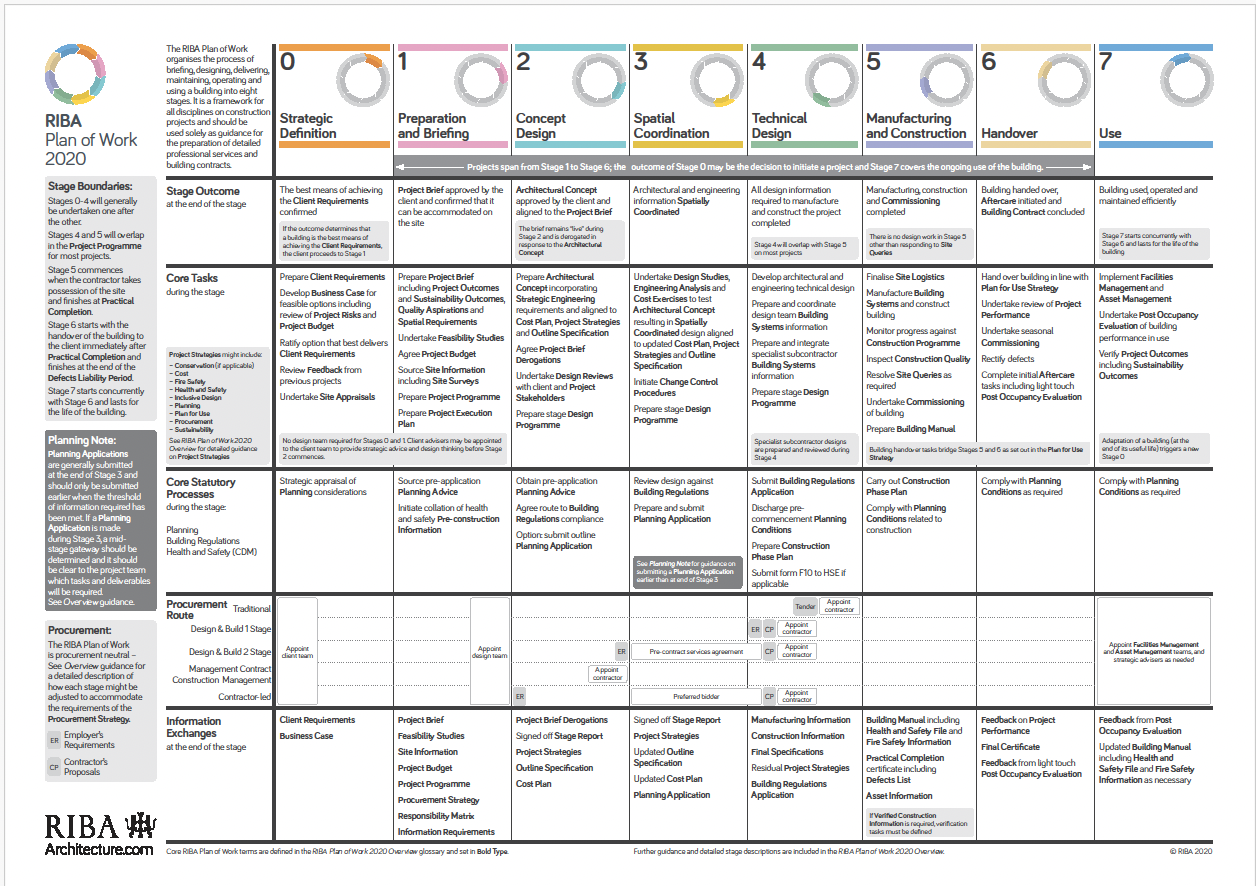
If you have ever spoken to an architect and heard them mention ‘Stage 2’ or ask whether you are ‘ready to go to Stage 3’, you may have wondered what exactly they were referring to. The answer is almost always the RIBA Plan of Work.The RIBA Plan of Work is the industry-standard framework used across the UK to organise and manage building projects. Published by the Royal Institute of British Architects it divides a project into eight distinct stages (numbered 0 to 7) from the very first conversations about whether to build at all, through design, planning, construction and long-term use. It applies equally to a modest home extension and a major new building.
The Plan of Work is not a rigid script. It is more like a shared language and a framework that allows architects, engineers, contractors and clients to understand where they are in the process and what comes next. Used well, it gives a project clarity, structure and a clear line of accountability at every step.
At Office Chew Stewart, we follow the RIBA Plan of Work on every project we deliver. What follows is our plain language guide to each stage. We will look at what happens, why it matters, and what it means for you as a client.

RIBA Stage 0: Strategic Definition
Every project begins before the first drawing is made. RIBA Stage 0 is about stepping back and asking the most fundamental question: is a building project actually the right answer? During this stage, the client's goals, budget and circumstances are assessed carefully. A range of options may be considered from building new, to extending an existing structure, to doing nothing at all. The aim is to make sure that any decision to proceed is well-founded and that resources are not committed to a project that does not yet have a clear rationale. The RIBA describes this as establishing a Business Case which is effectively: a structured document that captures the client's requirements, identifies potential risks and sets out the most appropriate route forward.
In plain terms…
This is where ideas begin to take shape and where the right questions get asked before any money is spent. A good Stage 0 saves clients from costly mistakes further down the line. For Office Chew Stewart, Stage 0 is also about building a relationship. Our first meeting (whether in person or online or on the phone) is an opportunity to understand your needs, your budget, and your ambitions and to start shaping a strategy that fits all three.
RIBA Stage 1: Preparation and Brief
With a clear strategic direction in place, RIBA Stage 1 moves into the preparation of a formal Project Brief. This is where your aspirations are translated into a structured set of requirements that will guide the design process. During this stage, the team gathers the information needed to inform design decisions. That includes initial cost estimates to test the feasibility of the project, early planning advice to understand what the local authority is likely to support and site surveys to establish the particular characteristics and constraints of your plot.
In plain terms…
Stage 1 is about listening and translating. Together we discuss the spaces you need, how your vision for materials and style, any practical requirements around accessibility or sustainability and the timescale and budget you are working within. The brief produced at this stage becomes the foundation for everything that follows. Getting it right here both carefully and collaboratively is one of the most valuable investments a client can make.
RIBA Stage 2: Concept Design
This is the stage that most clients associate most readily with architecture. RIBA Stage 2 is where the design begins to take visible form for the first time.The team develops an Architectural Concept, a coherent design proposition that responds to the brief, the site and your aspirations. Initial proposals are tested against budget, planning context and sustainability objectives. Where relevant, early pre-application discussions with the local planning authority may take place to gauge how the emerging design is likely to be received. Importantly, the concept developed at Stage 2 must be robust. Subsequent stages build directly upon it, which makes the quality of thinking at this point critical to the success of the whole project.
In plain terms…
This is where your project starts to come alive on paper and on screen. We begin by drawing your existing property in detail (floor plans, elevations, sections) which become the canvas for the new design which we explore through 3D modelling. If you have a strong vision, we develop it into professional drawings. If you are more open, we often present several sketch concepts, allowing us to test ideas and reveal possibilities that may not have been obvious at first.
RIBA Stage 3: Spatial Coordination and Planning Application
Having established a design concept, RIBA Stage 3 is about developing it to a level of detail sufficient to demonstrate how the project will actually work. The design is spatially coordinated (meaning that architecture, structure and building services are considered together and resolved into a coherent whole). This stage typically culminates in the submission of a Planning Application. The drawings and supporting documents prepared at Stage 3 are developed to the point where the local planning authority has enough information to make a decision. Depending on the nature and location of the project, the application may be accompanied by additional assessments such as a Heritage or Conservation Statement, a Flood Risk Assessment and a Design and Access Statement, among others.
In plain terms: This is where everything comes together. The design is refined and drawn up to full planning standard. We consider how rooms flow and connect, how the building sits within its surroundings and how structure and services can be integrated cleanly. Once the design is agreed with you, we prepare and submit the planning application. After submission, the local authority validates the documents, a process that typically takes up to ten days, before the application formally enters the review process. Validation is not the same as approval and simply confirms that all the necessary information has been received.

An example of planning drawings Office Chew Stewart produces at Stage 3 Spatial Coordination
RIBA Stage 4: Technical Design and Building Regulations
A planning consent marks an important milestone but the work of RIBA Stage 4 is equally significant. This is where the design is developed from an approved proposal into a fully detailed technical package (the set of drawings, specifications and coordinated information from which the building will actually be constructed). Stage 4 involves close collaboration between the architect and specialist consultants, including structural engineers, to ensure that every element of the design is technically resolved and compliant with Building Regulations. Detailed specifications are prepared, materials are confirmed, and the package is checked against cost plans before being released to contractors for tendering.
In plain terms: This is where ideas turn into precise instructions. Following a successful planning decision, Stage 4 transforms your design into a coordinated set of documents that builders, engineers, and inspectors can rely on. This stage may feel highly technical, but it is one of the most important milestones in a project. A thoroughly prepared Stage 4 package reduces the risk of delays, errors and unexpected costs during construction.

An example of the drawings Office Chew Stewart produces at Stage 4
RIBA Stage 5: Construction
RIBA Stage 5 is where your project is built. Once a contractor has been appointed and the construction programme agreed, the project moves into full delivery. All of the drawings and specifications prepared in Stage 4 feed into this process and the architect's role shifts from designing to monitoring ensuring that the built work reflects the agreed design and meets the required standard.
In plain terms: This is the stage where you first walk through spaces that were once only lines on paper. Any construction project can feel stressful and complicated and our advice is to appoint us throughout the construction programme so that we can work closely with the contractor, the Building Control inspector, and you to ensure your vision is achieved. When we are appointed to support Stage 5, our responsibilities typically include monitoring progress against the construction programme, inspecting the quality of work on site, resolving queries as they arise, overseeing commissioning of the building, and ultimately issuing the Practical Completion Certificate.
RIBA Stage 6: Handover and Close Out
The formal handover of a building does not mark the end of the process butthe beginning of RIBA Stage 6. During this stage, the construction team addresses any residual defects identified at or after handover. Practical Completion and a Final Certificate is issued, bringing the contractual involvement of the design and construction teams to a close. Stage 6 also involves a broader set of tasks that extend beyond contractual obligation. A Project Performance review allows the project team to reflect on what worked well and what could be improved lessons that benefit future projects and clients. Initial aftercare tasks are initiated and a light-touch Post Occupancy Evaluation may be carried out to understand how the building is performing in use.
In plain terms: Once your project is complete, we arrange the final certificates and ensure the contractor addresses any defects that emerge. We hand over the Health and Safety file (a document containing all the information about how the building has been put together, which will be invaluable to anyone carrying out future works). If we have been appointed through to Stage 6, we will also support the handover to your facilities management team and ensure you have everything you need to look after and enjoy your new building.
Why the RIBA Plan of Work Stages Matter
Used properly the RIBA Plan of Work gives every project a clear structure, helps clients understand what is happening and why, and ensures that the right decisions are made at the right time. Each stage builds on the one before it. A carefully considered brief at Stage 1 produces better concept designs at Stage 2. A robust concept at Stage 2 leads to a smoother planning process at Stage 3. Thorough technical design at Stage 4 reduces risk during construction at Stage 5. The stages are cumulative which is why rushing through the early ones rarely saves time or money in the long run. Office Chew Stewart offers architectural services across all RIBA stages, from initial brief through to construction and handover. Whether you are at the very beginning of a project or further along in the process, we can support you at every step.
Frequently Asked Questions
How many RIBA stages are there? The RIBA Plan of Work comprises eight stages, numbered 0 to 7. This guide covers Stages 0 to 6, which take a project from initial strategy through to handover.
Do I need to follow all RIBA work stages? Not every project requires every stage in full. Smaller projects may move through some stages quickly and the level of detail required at each stage will vary depending on the scale and complexity of the work. Your architect will advise on which stages are relevant to your project.
When does planning permission happen in the RIBA stages? Planning permission is typically sought during Stage 3: Spatial Coordination. At this point the design is sufficiently developed to support a full planning application.
What is the difference between RIBA Stage 4 and Building Regulations approval? RIBA Stage 4 is the process of preparing the detailed technical design package. Building Regulations approval is a statutory requirement and the two processes can happen in parallel.
Office Chew Stewart has significant experience working across all RIBA work stages in London and the UK, from rear and side extensions to loft conversions. If you are thinking about a project and would like to understand more about how the RIBA stages apply to your specific project, Office Chew Stewart would be glad to help.
Please get in touch via our contact page.